

/…/
—
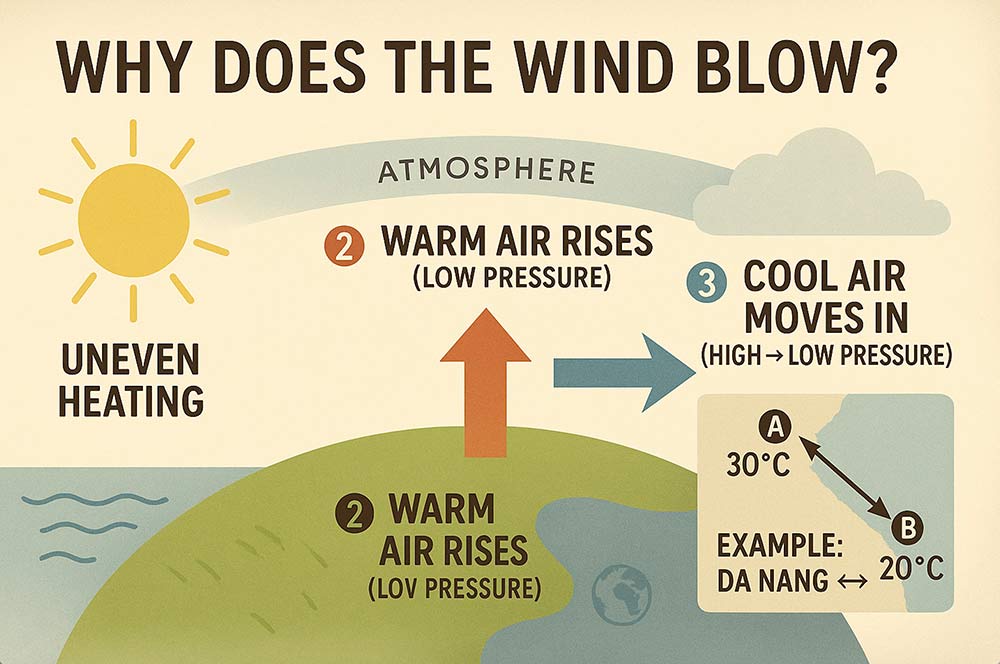
Because the Sun warms our planet unevenly. Sunlight passes through Earth’s atmosphere — a layer of air that surrounds Earth like a round ball. When some places get warmer than others, air pressure becomes different, and air moves from higher pressure to lower pressure. That moving air is the wind.
Why does the wind blow? 🌬
The Sun shines on the Earth. It heats different parts of the Earth's surface unevenly — not the same everywhere. This happens because of clouds, different types of surface (ground, mountains, water etc.), and the different angles at which sunlight hits the ground. So, air temperature changes from place to place. This creates a difference in air pressure.
How is air temperature related to air pressure?
When air gets warm, its molecules start to move faster and the air expands (spreads out). As a result, the density of the air decreases, which means, there are fewer molecules in the same volume of air (space). That means the pressure of air on the Earth's surface becomes lower in warmer areas. In colder areas, the air is denser (more packed), so the pressure there is higher.
According to the laws of physics, the atmosphere tries to equalize (make the same) this pressure difference. Pressure always moves toward balance. So air starts moving from areas of higher pressure (usually colder places) to areas of lower pressure (usually warmer places).
This movement of air is called wind.
LISTEN TO THE TEXT

За полгода вывожу ученика начального уровня на уровень уверенного общения, свободного выражения своих мыслей. Специализируюсь на экспресс-методах обучения.



 Как правильно изучать английский язык по карточкам (статьи)