

/…/
—
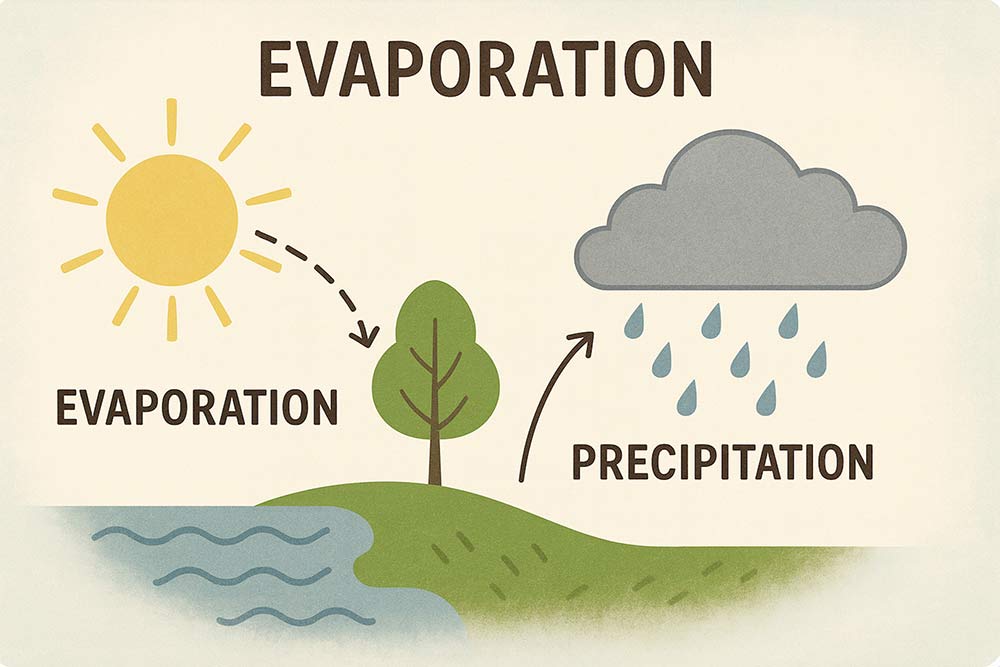
Rain happens because of the water cycle. First, liquid water on Earth evaporates and becomes water vapor in the air. Then this vapor condenses into clouds and later falls back as precipitation — rain, snow or hail.
Why does it rain? 🌧
Because of the water cycle.
1. Evaporation.
Water from oceans, rivers, lakes, and soil evaporates because of the Sun’s heat. Plants also release water through their leaves.
2. Cloud formation.
Water vapor goes up into the colder parts of the air. The higher it goes, the colder the air becomes. When water vapor gets cold enough, it condenses, which means it turns into tiny water drops. This is how clouds appear.
3. Growth of drops.
Tiny water drops bump into each other and join into bigger drops.
When the water drops become big and heavy, the rising air can no longer hold them. They fall down because of gravity as rain.
A cloud can give rain far away from the place where it was made. It carries water and inside the cloud drops keep bumping, growing, and then falling as precipitation.
LISTEN TO THE TEXT
За полгода вывожу ученика начального уровня на уровень уверенного общения, свободного выражения своих мыслей. Специализируюсь на экспресс-методах обучения.

 Как правильно изучать английский язык по карточкам (статьи)